 Geotechnical Engineering
 Geotechnical Engineering
Professor of Geotechnical Engineering · Graduate School of Engineering
Kyoto University, Japan
Enzyme-induced carbonate precipitation (EICP) has attracted increasing attention as a promising bio-mediated ground improvement technique. By promoting calcium carbonate precipitation through urease-catalyzed reactions, EICP can enhance soil strength and stiffness while modifying hydraulic properties. However, translating successful laboratory-scale treatments into practical engineering applications requires a better understanding of precipitation behavior, treatment uniformity, and scale-dependent performance.
This keynote presents an integrated experimental and numerical investigation of EICP-based ground improvement, with particular emphasis on scaling up from small laboratory specimens to large-scale experiments approaching practical engineering dimensions. Experimental results at different scales will be presented to examine the effects of treatment conditions and specimen size on calcium carbonate distribution and the resulting mechanical and hydraulic responses. Numerical modeling results will also be introduced to investigate the coupled processes governing reagent transport, chemical reactions, mineral precipitation, and changes in soil properties. Comparisons between experimental observations and numerical predictions will be used to discuss the applicability and limitations of the modeling approach.
Finally, the presentation will highlight key challenges and future directions for translating EICP technology into reliable and sustainable ground improvement practice.
Hideaki Yasuhara is Professor of Geotechnical Engineering at the Graduate School of Engineering, Kyoto University, Japan. Before joining Kyoto University in 2023, he was a professor at Ehime University. His research encompasses rock mechanics and geotechnical engineering, with particular interests in coupled thermal, hydraulic, mechanical, and chemical (THMC) processes, fracture permeability evolution, ground improvement, and the long-term performance of geo-engineered systems.
His work on sustainable soil stabilization includes the use of biologically mediated carbonate precipitation and enzyme-based approaches to improve soil engineering properties. He has also led international collaborative research on the stabilization of expansive soils for road infrastructure. Through experimental investigations and numerical modeling, his research seeks to connect fundamental processes with practical solutions to geotechnical and environmental challenges.
 Earthquake Engineering
Chair of Civil and Structural Engineering · Division of Engineering
University of Dundee, United Kingdom
GSI is an established branch of Earthquake Engineering that focuses on reducing seismic demand by engineering the soil-foundation system and its interaction with ground motion. GSI integrates soil dynamics, material nonlinearity, dynamic soil-foundation-structure interaction, and seismic isolation principles within a unified mechanism-based framework. GSI systems are classified into four principal branches based on their governing isolation mechanisms:
These four mechanism families collectively define the technical foundation of GSI and provide a structured basis for research, design, and practical implementation. This presentation intends to provide an overview of this emerging field.
Hing-Ho Tsang has over 20 years of academic experience across Australia, Hong Kong, and the UK. His research focuses on the behaviour and design of infrastructure systems under extreme loading, including earthquakes, impacts, and climate-related hazards. His work has evolved from hazard and performance assessment towards developing innovative infrastructure systems through mechanism-based design, deliberately harnessing physical mechanisms to control system-level behaviour.
He is a Chartered Professional Engineer (CPEng) and has contributed to seismic design guidelines and standards through research collaborations and advisory roles with government and industry. He is recognised among the World’s Top 1% of Scientists for both career-long and single-year impact in Civil Engineering (Elsevier/Stanford University). He served as the Australian National Delegate to the International Association for Earthquake Engineering (IAEE), serves on the editorial boards of several journals, including Soil Dynamics and Earthquake Engineering, and is the founder and chair of the Global Network for Geotechnical Seismic Isolation (GSI).
 Environmental Engineering
Professor, Institute of Environmental Radioactivity
Fukushima University, Japan
This keynote examines how plant-based materials can be engineered for the practical treatment of radionuclide-contaminated water. It focuses on three engineering requirements: capturing radionuclides in the presence of competing ions, maintaining material integrity, and operating under continuous-flow conditions. The continued use of nuclear energy and the prolonged environmental consequences of Chornobyl and Fukushima highlight the importance of this work.
Plant-based sorbents offer a renewable, potentially low-cost treatment approach, but raw biomass can have low material strength and insufficient binding capacity. Dissolved ions such as sodium, potassium, calcium, and magnesium can also compete with radionuclides for capture, limiting performance in real wastewater.
Based on recent literature and research from the Rahman Laboratory, the presentation examines how the transition from raw biomass to engineered composites addresses these limitations. It looks beyond laboratory measurements of adsorption capacity to connect material design with practical wastewater-treatment requirements, outlining a pathway toward more sustainable and scalable treatment of radionuclide-contaminated water.
Ismail Rahman is a Professor at the Institute of Environmental Radioactivity, Fukushima University, Japan, where he also leads the Radiation Morphology Division. His research focuses on the behavior and fate of environmental pollutants, eco-friendly approaches to environmental remediation and sustainable waste management, and organic liquid mixtures for process engineering.
He earned a B.Sc. in Chemistry and an M.Sc. in Applied Chemistry from the University of Chittagong, Bangladesh. As a TokyoTech-UNESCO Research Fellow at the Tokyo Institute of Technology (2004–2005), he obtained a Diploma in Environment. He completed his Ph.D. in Environmental Analytical Chemistry at Kanazawa University in 2011.
After working in management at Coats Bangladesh Ltd. (2001–2002), he joined the University of Chittagong, Bangladesh, as a Lecturer in October 2002 and rose to Professor. He served in the Department of Chemistry until March 2012, then in the Department of Applied Chemistry and Chemical Engineering until his voluntary retirement in September 2015. In Japan, he held a JSPS Postdoctoral Research Fellowship at Kanazawa University (2012–2014), followed by an appointment as an honorary Collaborative Professor since March 2015. He joined Fukushima University as an Associate Professor in October 2015 and became a Professor in April 2024.
He has published more than 200 peer-reviewed journal articles and has over 5,400 Google Scholar citations, an h-index of 39, and an i10-index of 106.
 Water & Environmental Engineering
Head of School (Interim) · School of Engineering
University of Wollongong, Australia
Pervious concrete is increasingly used in water-sensitive urban design to reduce surface runoff, support groundwater recharge and mitigate urban flooding. However, its potential role in improving stormwater quality is more complex. While its porous structure can retain suspended matter and remove pollutants through physical, chemical and biological mechanisms, the material may also alter water chemistry and release previously captured contaminants.
This presentation examines recent research on alkali-activated pervious concrete, including material design, heavy-metal adsorption, long-term hydraulic performance and pollutant leaching. The findings show that alkali-activated materials can provide effective contaminant removal, but their environmental performance cannot be assessed from initial pollutant capture alone. Binder composition can cause substantial initial increases in stormwater alkalinity, while maintenance practices such as vacuuming and pressure washing may remobilise accumulated pollutants.
The presentation highlights the need to move beyond infiltration capacity when designing pervious pavement systems. Long-term water quality, material leaching, maintenance practices and the fate of captured pollutants must all be considered if pervious concrete is to deliver reliable and sustainable stormwater-management outcomes.
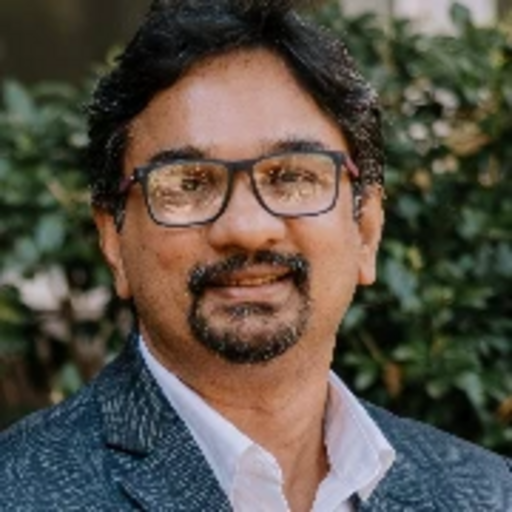
Dr Faisal Hai is a Professor and Head of the School of Engineering at the University of Wollongong (UOW), Australia, and Director of the Strategic Water Infrastructure Laboratory (SWIL). A Civil Engineer turned Environmental Engineer, Professor Hai has established an internationally recognised research profile in water and environmental engineering, with a strong focus on developing practical solutions to emerging environmental challenges. His research underpins the protection of land and water resources from contamination and spans water treatment and reuse, waste management, and environmental solutions for resource and energy development projects.
Professor Hai’s group works on stormwater management, climate-independent water sources and water quality, with particular emphasis on the remediation of emerging contaminants. Beyond his research, he contributes to the broader engineering and water research communities through academic, professional and industry engagement. He is also President of the Membrane Society of Australasia (MSA), reflecting his wider professional contribution to the water and membrane research community. His work brings together fundamental understanding and practical application, with a focus on solutions that contribute to resilient and sustainable water infrastructure.
 Transportation & Planning
School of Planning · Department of Civil and Resource Engineering
Dalhousie University, Canada
The keynote abstract will be published here shortly. Please check back later.
A detailed biography will be added shortly.
 Resource Management
Professor, Resource Management, Faculty of Civil and Environmental Engineering
Bauhaus-Universität Weimar, Germany
Professor, Resource Management · Faculty of Civil and Environmental Engineering
Bauhaus-Universität Weimar, Germany
Resource-Oriented Sanitation Systems (ROSS) are considered a promising approach to addressing current and future challenges in urban wastewater management, including demographic shifts, climate change, increasing water scarcity and the deterioration of aquatic ecosystems. In contrast to conventional wastewater systems – characterized by flush toilets, sewer networks, and centralized wastewater treatment plants – ROSS combine wastewater treatment with the recovery of water, nutrients, energy and organic resources while ensuring the protection of public health and the environment. By applying circular economy principles, these systems contribute to the development of resource-efficient and climate-resilient urban water infrastructure.
A fundamental principle of ROSS is the separation of domestic wastewater into distinct material flows according to their origin, characteristics and resource recovery potential. These primarily include greywater (wastewater from kitchens, bathrooms, and laundry) and blackwater (toilet wastewater), with the latter differentiated into brownwater (feces and flushing water) and yellowwater (urine and flushing water). The separate collection, conveyance and treatment of source-separated flows enable targeted treatment processes that facilitate nutrient recovery, water reuse and energy generation as well as reducing environmental impacts through more efficient removal of pollutants.
Today, following years of laboratory research and pilot-scale testing, several pioneering projects across Europe demonstrate the practical implementation of ROSS at community and neighbourhood scales. Examples include the Hamburg Water Cycle in Hamburg (Germany), Superlocal in Kerkrade (the Netherlands) and Oceanhamnen in Helsingborg (Sweden). These initiatives illustrate different approaches to source-separated wastewater management such as the reuse of treated greywater for different domestic and public purposes, the recovery of heat from greywater and the production of agricultural fertilizer based on blackwater and added organic kitchen waste.
Against this background, the presentation highlights the multifaceted resource potential of wastewater, examines emerging conceptual and technological developments and draws on practical implementation experiences across Europe. By comparing selected European initiatives, the presentation aims to identify key opportunities and challenges for integrating ROSS into future urban waste and water management strategies.
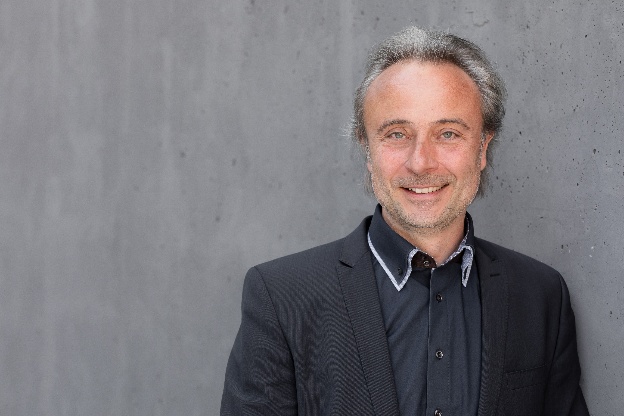
Dr.-Ing. Eckhard Kraft is a full Professor for “Resource Management” at the Bauhaus-Universität Weimar, Germany. Before that he did research at the University of Alberta, Edmonton, Canada in the field of waste management. The main topic of his PhD (Dr.-Ing.) in civil engineering was related to fluid flow and material characteristics in packed beds of organic waste.
Before starting an academic career, he worked at a company of consulting engineers in Essen, Germany, specialising in waste management, research and development, landfill construction, and planning of biological treatment facilities. He studied civil engineering at the Technical University of Dresden, Germany, specialising in environmental engineering.
He has collaborated continuously in research projects with Bangladeshi universities since 2007. He is interested in general waste management, coupling of regenerative energy with innovative urban drainage systems, and different facets of anaerobic digestion.
 Civil Engineering & Construction
Department of Civil Engineering and Construction
Bradley University, Peoria, IL, USA
The keynote abstract will be published here shortly. Please check back later.
A detailed biography will be added shortly.
Developed by IICT, CUET